Imagine a sudden, catastrophic shift where the delicate threads of modern society unravel overnight. One moment, you’re navigating daily routines, and the next, the world descends into an unprecedented global conflict, as the video above starkly illustrates with its “World War III started tomorrow” scenario. The truth is, most individuals might not endure long without foresight and adequate preparation, not due to personal weakness but from a lack of essential survival knowledge and tools.
While many people might instinctively think of overwhelming firepower as their primary defense, genuine survival hinges on a more comprehensive approach. True readiness encompasses not only personal protection but also securing basic necessities like sustenance, clean water, and a safe refuge. This often overlooked aspect of preparedness can make all the difference when critical infrastructure collapses and familiar supply chains vanish entirely, underscoring the vital need for a diverse array of reliable gear.
Essential Gear for World War III Survival: Beyond the Battlefield
When society teeters on the brink, your ability to adapt and sustain yourself becomes paramount. The video highlights 11 crucial items, each serving a specific, life-sustaining purpose in a future characterized by chaos and uncertainty. Moving beyond the immediate threat, these tools empower individuals to forge an existence in a world where fundamental services no longer exist. Understanding the utility and strategic importance of each item is the first step toward genuine resilience.
The Unsung Hero: Versatile Tools for Immediate Needs
Amidst the clamor for high-tech solutions, the humble knife remains an indispensable survival companion, as emphasized by the legendary KA-BAR USMC Fighting Knife. With its robust 7-inch 1095 Cro-Van steel blade, this iconic tool has served Marines since the 1940s, proving its mettle across 80 years of intense combat zones and diverse environments. Unlike firearms, a knife operates silently, offering unparalleled versatility for tasks ranging from cutting rope and preparing food to building shelters and even serving as a close-quarters defense weapon.
Beyond its obvious combat applications, the KA-BAR’s rugged construction allows it to withstand significant abuse from dirt, rain, and even saltwater, consistently performing its critical functions. This unwavering reliability in harsh conditions makes it far superior to many flimsy modern alternatives. Consequently, its proven track record in scenarios like the swamps of Vietnam and the sands of Iwo Jima provides a strong testament to its enduring value in any World War III survival kit.
Protecting the Unseen: Countering Environmental Threats
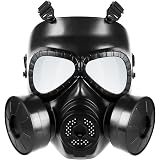
While direct combat poses an immediate danger, invisible threats often prove far more insidious and lethal in a global conflict. The widespread impact of radiation, chemical agents, and airborne toxins can swiftly render large areas uninhabitable, making specialized protective gear absolutely indispensable. A high-quality gas mask, specifically an NBC CBRN rated model equipped with P3 filters, offers crucial protection against chemical vapors, radioactive particles, and biological agents, allowing safe movement through contaminated zones.
Moreover, pairing a robust gas mask with a hazmat suit, crafted from advanced materials like Dupont Tychem, establishes a critical barrier that safeguards the skin from direct exposure to harmful substances. In a post-strike environment, where toxic dust and ash could linger for extended periods, such equipment transitions from being a specialized item to a fundamental necessity. Preparing for these environmental hazards is often overlooked by the average person, yet the prepared survivor understands that clean air is a non-negotiable prerequisite for any long-term survival strategy.
Strategic Firearms: Balancing Power, Stealth, and Sustenance
Survival in a volatile world necessitates a diverse approach to defense and resource acquisition, which is precisely why the Ravin R500 Crossbow earns its place on this vital list. While often underestimated in an age of firearms, the R500’s ability to launch bolts at a blistering 500 feet per second, combined with its compact and lightweight design, delivers remarkable accuracy. Its defining advantage, however, is its absolute silence, a stark contrast to the attention-drawing roar of gunfire that could compromise a survivor’s position for miles.
This silent lethality makes the crossbow ideal for discreet hunting of game like deer or wild hogs, securing vital calories without alerting potential threats. Furthermore, its reusable ammunition provides a significant logistical advantage over finite firearm cartridges, ensuring long-term utility. In a close-quarters defense scenario, the R500 can serve as a devastating last line of defense, maintaining the element of surprise. Its innovative crank system further enhances its practicality, enabling rapid and easy cocking even under extreme duress.
Reliable Sustenance: The Ruger 10/22 for Small Game
For securing daily sustenance, the Ruger 10/22 stands out as an almost universally recommended survival rifle among seasoned preppers and hunters. Chambered in the ubiquitous 22LR, this lightweight semi-automatic rifle weighs barely 5 pounds, making it incredibly easy to carry for extended periods. Its 10-round rotary magazine allows for quick follow-up shots, ensuring efficient harvesting of small game like squirrels and rabbits, which are crucial for calorie intake when larger prey is scarce or impractical to pursue.
The affordability and light weight of 22LR ammunition represent another significant advantage; one can easily transport thousands of rounds without excessive burden, a feat impossible with larger calibers. The Ruger 10/22’s adaptability, enhanced by countless aftermarket modifications for scopes, stocks, and magazines, allows it to evolve with changing survival needs. In a World War III scenario, where every calorie counts and adaptability is king, the 10/22 provides an indispensable tool for consistent food acquisition.
Long-Range Control: The Springfield M1A 6.5 Creedmoor
When the need arises to establish a secure perimeter or engage threats and game at considerable distances, the Springfield M1A chambered in 6.5 Creedmoor becomes an invaluable asset. This semi-automatic rifle, featuring a 22-inch barrel and a durable synthetic stock, combines formidable accuracy with impressive power. The 6.5 Creedmoor cartridge is celebrated for its exceptionally flat trajectory and precision, allowing confident engagement of targets up to 800 yards away.
Such long-range capability is not merely about hunting; it provides a critical defensive advantage, enabling survivors to neutralize threats long before they approach a camp or shelter. Drawing from the proven design of the M14 battle rifle, the M1A boasts a rugged, time-tested reliability that has seen decades of military service. This combination of robust construction and modern accuracy makes the M1A a cornerstone for maintaining control of space, directly translating to enhanced safety and security in a volatile World War III environment.
Personal Defense: The Beretta 92FS Handgun
In close-quarters encounters or as a readily accessible backup, a reliable handgun is indispensable for personal defense, and the Beretta 92FS has repeatedly proven its worth. This battle-proven sidearm served as the standard for the US military for over three decades, establishing an undeniable reputation for reliability and accuracy. Chambered in 9mm with a 15-round magazine, it offers smooth shooting characteristics and an open slide design that significantly reduces the likelihood of jams, a critical factor under stress.
Its all-metal frame effectively absorbs recoil, contributing to greater accuracy and control during rapid firing. Furthermore, the widespread global adoption of 9mm ammunition means that resupply would be more feasible, even in a fractured world with disrupted logistics. The Beretta 92FS, while not the newest design, embodies a workhorse mentality, trusted by countless soldiers and law enforcement officers who have staked their lives on its performance when chaos inevitably erupts.
Close-Quarters Dominance: The Beretta 1301 Tactical Shotgun
For situations demanding overwhelming power in confined spaces, few weapons compare to a 12-gauge shotgun, and the Beretta 1301 Tactical stands out as a premier choice. This semi-automatic shotgun, powered by a gas-operated Blink system, cycles shells with remarkable speed, allowing for faster follow-up shots than most shooters can achieve. Its compact design, featuring an 18.5-inch barrel, makes it exceptionally maneuverable in tight environments like urban alleys, abandoned buildings, or within a fortified shelter.
The versatility of the 1301 is crucial; loaded with buckshot, it offers devastating stopping power against immediate threats, while slugs provide extended range and penetration for larger targets. Beyond defense, a shotgun remains a valuable hunting tool for various game, conserving precious rifle ammunition. The tactical model comes optics-ready with rails for lights or red dots, making it highly adaptable for low-light or urban combat scenarios. Its reputation for unwavering reliability ensures that when flexibility and immediate threat neutralization are paramount, the Beretta 1301 Tactical delivers.
Ultimate Versatility: The AR-15 Platform
The AR-15 platform epitomizes adaptability in a World War III survival context, offering an unmatched balance of firepower, range, and control. Chambered in 223 Remington and 556 NATO, this lightweight rifle typically weighs between 6 to 7 pounds, making it manageable for diverse operational needs. Its modular design allows for endless customization with adjustable stocks, rail systems for optics and lights, suppressors, and extended magazines, enabling it to transition seamlessly between environments.
Whether navigating dense urban landscapes requiring a compact, maneuverable rifle for close quarters or operating in open countryside where accuracy for hunting deer is essential, the AR-15 excels in both. Its widespread adoption by militaries globally means spare parts and ammunition will likely be more accessible than for almost any other rifle, a crucial factor when supply chains disintegrate. This inherent versatility and logistical advantage cement the AR-15’s position as the Swiss Army Knife of survival rifles.
Sustaining Life: Food, Water, and Shelter Fundamentals
While defensive tools address immediate threats, long-term survival hinges entirely on securing fundamental resources like food and clean water, alongside establishing a fortified refuge. Without these basic necessities, even the most heavily armed survivor will eventually succumb to the elements or starvation. The strategic stockpiling of essential supplies ensures that energy levels remain high, focus stays sharp, and critical decisions are made clearly, rather than under the debilitating influence of hunger or thirst.
Reliable Nutrition: MREs & Freeze-Dried Food
In a scenario where conventional food sources cease to exist, stockpiled nutrition becomes an absolute lifeline, preventing starvation—one of the fastest killers in any widespread collapse. MREs (Meals Ready to Eat), originally developed for military use, offer a calorie-dense and nutritionally balanced solution, sealed against the elements for extended shelf life. These self-contained meals provide a crucial mix of carbohydrates, fats, and proteins, essential for maintaining energy during strenuous activity and psychological stress.
Freeze-dried foods, alternatively, boast an even more impressive shelf life of up to 25 years, alongside being ultra-light and highly packable. With only boiling water, a full, satisfying meal can be prepared in mere minutes, making them ideal for both long-term storage and mobile bug-out scenarios. In a world devoid of functioning grocery stores and predictable farming, these compact, reliable food sources liberate survivors from constant scavenging, allowing them to concentrate on other critical aspects of World War III survival.
The Lifeblood: Portable Water Filters
While food provides long-term sustenance, clean water is an immediate, non-negotiable requirement for survival; a human can endure weeks without food but only approximately three days without hydration. The complete breakdown of infrastructure during a World War III event means that previously safe water sources, including rivers, wells, and even municipal supplies, will likely become contaminated. This makes portable water filters like the Lifestraw and Sawyer Mini absolutely indispensable tools.
These pocket-sized devices boast incredible efficacy, removing 99.999% of bacteria, protozoa, and microplastics from questionable water sources. The Sawyer Mini, for example, can filter an astonishing 100,000 gallons of water, providing enough clean drinking water for many years of survival. Weighing almost nothing and working instantly, these filters transform muddy, potentially lethal water into safe hydration, a capability that profoundly impacts mobility and endurance. Every experienced survivalist recognizes that without access to clean water, all other preparations are ultimately futile.
The Ultimate Sanctuary: Underground Shelters & Rural Bug Out Spots
Ultimately, the most critical asset for long-term World War III survival isn’t a weapon or a food supply, but a secure, strategic location to endure the chaos: an underground shelter or a well-prepared rural bug out spot. A true survival shelter offers comprehensive protection against multiple threats, including nuclear fallout, extreme weather events, and direct human aggression. It serves as a fortified base where essential supplies can be stored, defenses can be established, and critical rest can be achieved without fear of exposure.
Underground shelters, in particular, benefit from stable temperatures, natural radiation shielding, and inherent concealment, making them ideal for extended stays. Recognizing that cities will be ground zero for chaos, a rural bug out location—be it a reinforced basement, a hidden bunker, or a remote cabin—provides the necessary distance from population centers. When stocked with food, clean water, defensive tools, and the gear discussed, such a location transforms mere temporary survival into a long-term reality. These shelters are the enduring castles of preparedness, providing the crucial foundation for enduring the unthinkable.
Debriefing: Your WW3 Survival Gear Questions
What is the main idea of survival preparedness for a global conflict?
Survival preparedness involves a comprehensive approach that goes beyond just weapons. It means securing basic necessities like food, clean water, and a safe shelter in addition to personal protection.
Why is a knife considered an important survival tool?
A knife is an indispensable survival tool because it’s incredibly versatile. It can be used silently for tasks like cutting, food preparation, building shelters, and self-defense.
What types of food are recommended for long-term survival?
For long-term survival, MREs (Meals Ready to Eat) provide calorie-dense, balanced nutrition. Freeze-dried foods are also recommended due to their very long shelf life and light weight.
How can I ensure I have clean drinking water in a survival situation?
Portable water filters like the Lifestraw or Sawyer Mini are essential for clean drinking water. These small devices effectively remove harmful bacteria, protozoa, and microplastics from unsafe water sources.
What is a ‘bug out spot’ and why is it important?
A bug out spot is a secure, strategic location, often a rural property or underground shelter, where you can go to escape chaos. It provides distance from population centers and a safe place to store supplies and endure threats.